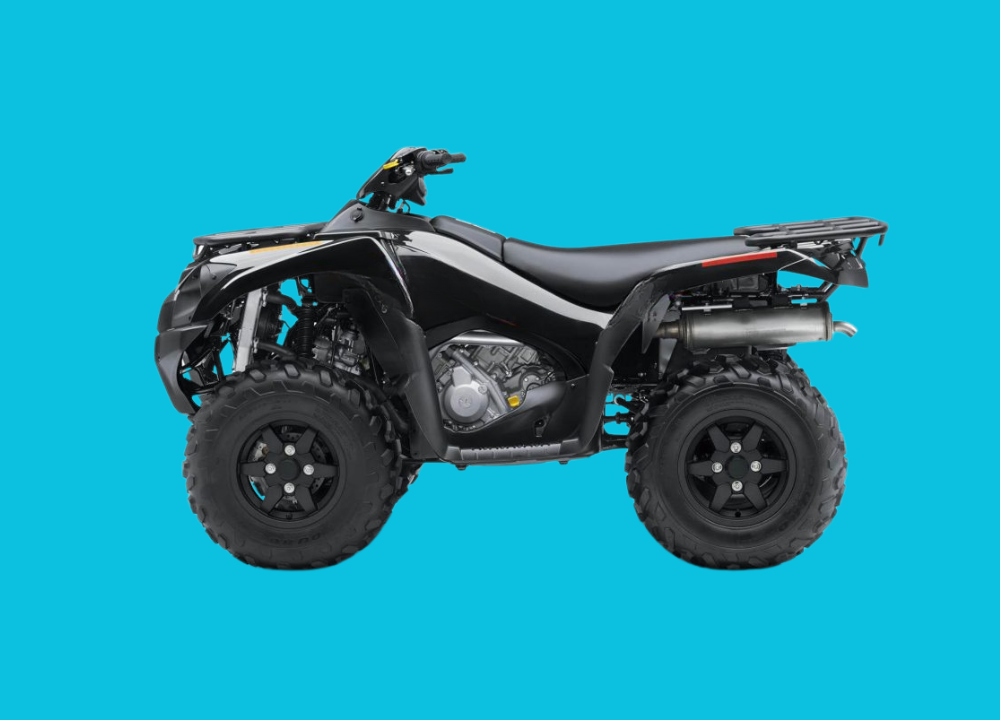
The most common Kawasaki Brute Force 750 problems are overheating, a battery that won’t charge, hard starting, belt wear and limp mode, 4WD engagement trouble, and worn suspension parts. Most can be traced with a multimeter and a careful look at the radiator, belt and wiring before you buy expensive parts.
The Brute Force 750 uses a 749cc liquid-cooled V-twin with a CVT transmission. Later “4x4i” models are fuel-injected (the “i”), while early models used carburetors. Many models also have Kawasaki Engine Brake Control (KEBC) and selectable 2WD/4WD with a variable front differential lock.
Each problem below lists the symptoms, the usual cause, how to fix it and the part you may need. Start with the cheapest checks first.
Kawasaki Brute Force 750 Problems at a Glance
| Problem | Common symptom | Most likely cause | First fix to try | Part you may need |
|---|---|---|---|---|
| Overheating | Temp light, fan not running | Mud in radiator, fan circuit or temp sensor | Clean radiator, test fan and sensor | Temp sensor, fan relay/breaker, coolant |
| Battery not charging | Dies after riding | Bad bus connector, regulator/rectifier or stator | Test charging voltage, check connectors | Regulator/rectifier, stator |
| Hard starting | Cranks but won’t start | Weak battery, fuel, plugs, valve clearance | Charge battery, fresh fuel, new plugs | Battery, spark plugs |
| Belt wear / limp mode | Slipping, burning smell, limp mode | Worn belt, heat, water in CVT | Replace belt, reset belt switch | Drive belt |
| 4WD / KEBC trouble | 2WD/4WD light flashing, 4WD won’t engage | Actuator, switch, wiring | Check fuses and wiring, roll slightly to engage | 4WD actuator, switch |
| Suspension and steering wear | Loose steering, clunks | Worn bushings, ball joints, tie rods, bearings | Inspect each part for play | Bushings, ball joints, tie rod ends |
1. Brute Force 750 Overheating
Mud packed into the radiator is the usual cause, but owners also report fan problems. One owner of a 2011 Brute Force 750 found the fan would not run with the coolant temperature sensor plugged in; when he unplugged the sensor, the fan ran but the FI warning light came on. Replacing the sensor and fan breaker didn’t fix it, which pointed toward the wiring or ECM.
How to fix it
- Let the engine cool fully before opening the radiator cap.
- Wash mud out of the radiator fins gently, from the back toward the front.
- Check the coolant level and top up with the coolant listed in your manual.
- Warm the engine and confirm the fan switches on. If it doesn’t, check the fan fuse/breaker and relay.
- Test the coolant temperature sensor’s resistance against the service manual before replacing it.
- If the sensor, fan and wiring all test good, have a dealer check the ECM.
On many Brute Force models, the coolant reservoir is hard to reach. Owners reach it by turning the front wheel and removing the lower screws on the radiator shield instead of stripping the front end.
Parts you may need: coolant temperature sensor, fan relay or breaker, coolant.
2. Battery Not Charging
If the battery is fine at the start of a ride but dead at the end, the charging system isn’t keeping up. One Brute Force owner replaced the regulator/rectifier and tested the stator, only to find the real fault was a bad bus connector in the wiring.
How to fix it
- With the engine running and revved slightly, measure voltage at the battery. It should rise clearly above resting voltage (roughly 13.5–14.5 V).
- Inspect connectors between the stator, regulator/rectifier and harness for burned pins, corrosion or melted plastic. Check the bus connector too.
- Test the stator resistance and AC output against the service manual.
- Only replace the regulator/rectifier or stator after the wiring checks out.
- Avoid overloading the system with light bars and heated grips.
Parts you may need: regulator/rectifier, stator, wiring connectors.
3. Hard Starting
- Weak battery or poor connections: charge and test the battery, then clean the terminals and grounds.
- Starter relay: if you hear only a click, test the relay and starter.
- Old fuel: drain fuel that has sat for months and refill.
- Spark plugs: the V-twin has two plugs; replace both.
- Valve clearance: if it cranks well but needs starting fluid to fire, the valves may need adjustment. This is a big job; leave it to a shop if you haven’t done it before.
Parts you may need: battery, spark plugs, starter relay.
4. Belt Wear, Clutch Problems and Limp Mode
Heavy loads, mud, plowing and water in the CVT case wear the belt quickly. On some models, a worn belt can trigger a switch in the belt cover that puts the machine into limp mode. One owner cleared limp mode by replacing the belt and resetting that switch.
How to fix it
- Use low range for loads, towing, plowing and mud.
- Inspect the belt for glazing, cracks, fraying and width. Replace it if it’s out of spec.
- Clean dust and debris out of the CVT case, and drain and dry it after water crossings.
- After replacing the belt, reset the belt switch if your model has one.
- If you plow or tow often, keep a spare belt.
Parts you may need: drive belt, CVT cover gasket.
5. 4WD and KEBC Problems
Owners report the 2WD/4WD indicator flashing, 4WD engaging late, or not engaging at all when the machine is stuck.
How to fix it
- Check the fuses, the 2WD/4WD switch and the wiring to the front actuator.
- If 4WD won’t engage while stuck, rock or roll the ATV slightly so the gears can line up.
- Clean and inspect the actuator connector for water and corrosion.
- If the actuator doesn’t respond with good power and ground, it may need replacing.
Parts you may need: 4WD actuator, 2WD/4WD switch.
6. Suspension and Steering Wear
Mud and water wear out A-arm bushings, ball joints, tie rod ends and wheel bearings. They can all cause similar clunks and loose steering, so check each one instead of guessing.
- Lift the front and rock each wheel top-to-bottom (bearings, ball joints) and side-to-side (tie rods).
- Check A-arm bushings for play at the frame.
- Replace worn parts in pairs where possible.
Parts you may need: A-arm bushings, ball joints, tie rod ends, wheel bearings.
Useful tools for these fixes: a battery maintainer keeps the battery healthy between rides, dielectric grease protects the 4WD and charging connectors from water, and 50/50 premixed coolant makes topping up easy.
Maintenance That Prevents Most Brute Force 750 Problems
| How often | What to do |
|---|---|
| After muddy rides | Wash radiator, check CV boots, air filter and CVT drain |
| Monthly | Check battery voltage, coolant and tire pressure |
| Every season | Inspect belt, wiring connectors, suspension parts |
| Per service manual | Engine oil and filter, spark plugs, valve clearance, differential oils |
| Before storage | Fresh fuel with stabilizer, battery maintainer |
Frequently Asked Questions
Is there a recall on the Kawasaki Brute Force 750?
Yes, for some years. In 2017, Kawasaki recalled all 2017 Brute Force 750 models (along with some Teryx and Mule models) because the fuel gauge retainer could collapse and leak fuel. In 2021, about 70 2021 Brute Force 750 4x4i EPS units were recalled because the fuel pump retainer plate bolts could loosen. Ask a Kawasaki dealer to check your VIN.
What engine is in the Brute Force 750?
A 749cc liquid-cooled V-twin. Later 4x4i models are fuel-injected; early models used carburetors.
Why is my Brute Force 750 in limp mode?
A common cause is a worn drive belt triggering the belt cover switch. Replace the belt and reset the switch, then check for other fault codes if it stays in limp mode.
Is the Kawasaki Brute Force 750 reliable?
Owners value its V-twin power, but cooling, charging and 4WD actuator issues come up often on older machines. Regular cleaning and electrical checks prevent most of them.
What is EPS on a Brute Force 750?
EPS is electric power steering, which makes steering lighter at low speeds and in rough terrain.
Conclusion
Most Kawasaki Brute Force 750 problems start with heat, mud and wiring. Keep the radiator and belt case clean, test the charging system with a multimeter, and check connectors before replacing parts, and this V-twin will keep pulling for years.
Related guides: Yamaha Kodiak 700 problems · Suzuki King Quad 400 problems · All ATV problems