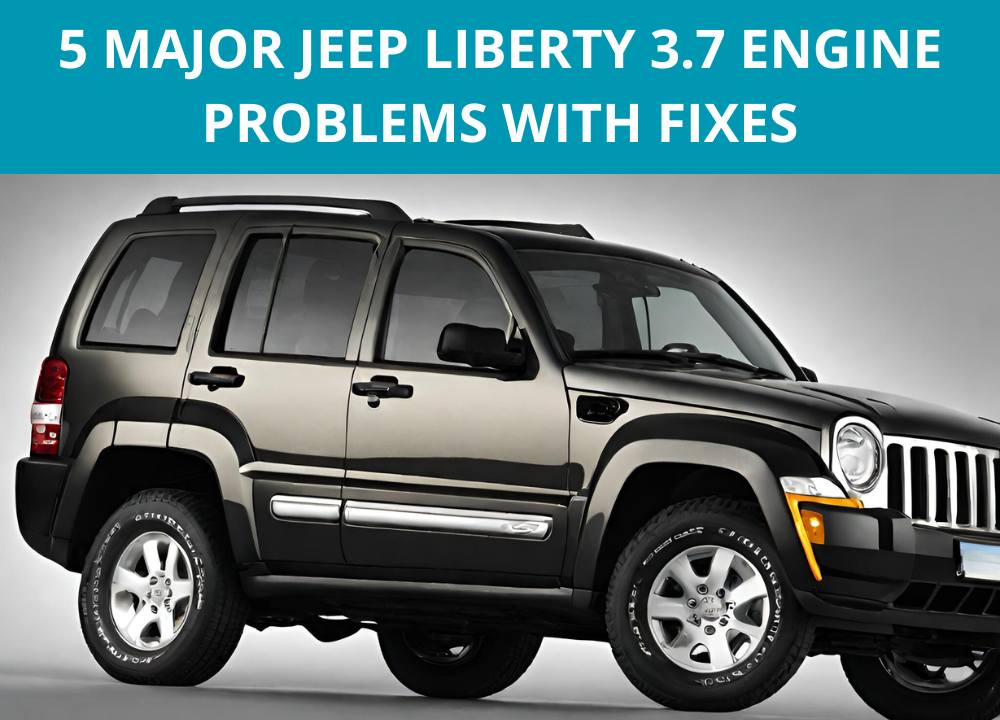
The biggest Jeep Liberty 3.7 engine problem is overheating that leads to dropped valve seats and head gasket failure. Other common Liberty problems are front lower ball joint failure on 2002–2006 models (recalled), oil leaks and hard-to-service parts, starter wiring faults, transmission wear, and, on the 2005–2006 diesel, EGR, carbon buildup and rocker arm failures.
The Jeep Liberty was sold in two generations: the KJ (2002–2007) and the KK (2008–2012). Most were built with the 3.7L PowerTech V6 gasoline engine. For 2005–2006, US buyers could also get the Liberty CRD with a 2.8L four-cylinder turbodiesel.
Jeep Liberty Problems at a Glance
| Problem | Engine / years | Warning signs | What to do |
|---|---|---|---|
| Overheating → dropped valve seat / head gasket | 3.7L V6, all years | Temp gauge climbing, coolant loss, misfire, ticking | Fix cooling problems immediately; never drive hot |
| Lower ball joint failure | 2002–2006 (recalled) | Clunks, wandering, front end drops | Confirm recall was done; inspect ball joints |
| No-start from starter wiring | 3.7L | Clicks or nothing when turning the key | Check starter and its wiring |
| Transmission wear | All | Slipping, harsh shifts, shudder | Check fluid and service history |
| EGR and carbon buildup | 2.8L CRD diesel (2005–2006) | Power loss, jerking, check engine light | Clean intake and EGR, replace EGR valve |
| Rocker arm failure | 2.8L CRD diesel | Misfire, power loss, engine stops | Replace rocker arm/tappet assemblies |
1. Overheating, Dropped Valve Seats and Head Gaskets (3.7L)
Owners of the 3.7L consistently say overheating is the thing to avoid. When this engine runs hot, a valve seat can come loose and drop into the cylinder, or the head gasket can fail. Either one can mean a major engine repair. Owners report the 3.7 commonly lasting 125,000–167,000 miles or more when the cooling system is kept healthy.
Warning signs
- Temperature gauge rising above normal, especially in traffic or towing
- Coolant level dropping with no obvious leak
- Ticking or tapping noise, misfire, or a check engine light
- White exhaust smoke or a sweet smell
How to prevent and fix it
- Pull over and shut the engine off as soon as the gauge climbs. Don’t keep driving hot.
- Check the coolant level when cold and use the coolant type Jeep specifies. If you use a premix, a 50/50 premixed coolant makes top-ups easy.
- Replace old original radiator hoses, the thermostat and the radiator if they are original on a high-mileage engine.
- Make sure the electric cooling fan works.
- If it has already overheated, have a mechanic run a compression or leak-down test before it fails completely.
The 3.7L oil filter is hard to reach and often installed by feel. Make sure it’s tight and the gasket is seated after every oil change to avoid a leak that leads to low oil pressure.
2. Front Lower Ball Joint Failure (2002–2006)
Early Liberties had a serious ball joint problem. In 2006, Jeep recalled about 832,000 2002–2006 Liberty SUVs because the front lower ball joints could wear, loosen and separate, which can cause loss of steering control. Owners reported the front end dropping onto the tire. Jeep replaced the joints with a redesigned part at no cost.
- If you own or are buying a 2002–2006 Liberty, ask a Jeep dealer to confirm the ball joint recall was completed for that VIN.
- Even after the recall, ball joints wear. Lift the front and check for play every year.
- Get an alignment after replacing ball joints.
3. No-Start From Starter Wiring
Some 3.7L owners report a no-start caused by a faulty wire to the starter. If you hear a click or nothing when turning the key, check the battery with a digital multimeter first (about 12.6 V when charged), then inspect the starter wiring and connections before replacing the starter.
4. Transmission Wear
Owners report torque converter failures and transmission rebuilds on high-mileage Liberties. Check the transmission fluid condition, ask for the service history before buying, and watch for slipping, harsh shifts or shudder at highway speed.
5. Jeep Liberty CRD Diesel Problems (2005–2006)
The 2.8L CRD diesel gets good fuel economy but has its own weak points.
EGR valve and carbon buildup
Owner complaints to NHTSA describe sudden power loss, jerking at highway speed and check engine lights. The EGR valve was the most common repair, sometimes replaced several times without fixing the problem. Mechanics report heavy carbon buildup in the intake passages and EGR area on this engine, so cleaning the intake is often needed along with a new EGR valve.
Rocker arm failure
Mechanics describe rocker arm failure as a common concern on the 2.8L CRD. In one 2005 Liberty diesel, broken rocker arm/tappet assemblies on cylinder 3 caused power loss on hills, a misfire code and finally the engine stopping on the highway. The repair meant removing the timing belt, replacing all rocker assemblies, regrinding the damaged camshaft, and cleaning the carbon from the intake.
Timing belt
Unlike the 3.7L (which uses a timing chain), the CRD uses a timing belt. Replace it on schedule (around 90,000 miles was the interval in the repair above), along with the tensioners, idler pulleys and water pump.
Maintenance That Prevents Most Liberty Problems
| How often | What to do |
|---|---|
| Every oil change | Check coolant level, look for leaks, confirm the oil filter is tight |
| Yearly | Check ball joints, tie rods and front struts |
| Every few years | Replace coolant, thermostat and old hoses |
| Per owner’s manual | Transmission fluid service; timing belt on the CRD diesel |
| Long storage | Use a battery maintainer |
Frequently Asked Questions
What is the most common problem with the Jeep Liberty?
On the 3.7L V6, overheating is the most serious problem because it can drop a valve seat or blow the head gasket. On 2002–2006 models, front lower ball joint failure was common enough to trigger a large recall.
How long does the Jeep Liberty 3.7 engine last?
Owners commonly report 125,000–167,000 miles or more, as long as the engine has never been overheated and the cooling system has been maintained.
Which Jeep Liberty years were recalled for ball joints?
Jeep recalled about 832,000 2002–2006 Liberty SUVs for front lower ball joints that could separate. Ask a dealer to confirm the work was done on your VIN.
Is the Jeep Liberty diesel reliable?
The 2.8L CRD is economical but known for EGR and carbon buildup problems and rocker arm failures. A service history showing EGR work and a recent timing belt is a good sign when buying one.
What are the common problems with the 2008 Jeep Liberty?
The 2008–2012 Liberty still uses the 3.7L, so overheating and cooling system care remain the main engine concern. Owners also report transmission wear, front suspension wear and electrical faults with age.
Conclusion
The Jeep Liberty 3.7 can last a long time if it never overheats. Keep the cooling system healthy, check the ball joints and suspension, and look at the transmission’s history before buying. If you own a CRD diesel, plan for EGR cleaning and keep the timing belt on schedule.
More Jeep guides: Jeep maintenance guide · Jeep Cherokee Sport mode explained · All Jeep articles